Restaurant Water Extraction
Restaurant Water Extraction
Plan healthcare water extraction around care schedules, controlled entry, and clear communication between facility staff and the extraction provider.
Healthcare facilities should define which rooms can be entered, when work may occur, and which care routes must remain open. Coordinate those limits with facilities and clinical operations, then ask an extraction provider to confirm the affected areas and removal scope.
Start by identifying the person who can approve entry, then ask clinical operations which rooms or routes must stay available. In Spokane Valley, a medical facility water emergency may affect patient movement even when the pooled water appears limited. Healthcare water extraction planning should establish which function takes priority, when a work area can be released, and who can make that call during a shift change. That order gives the pros we connect you with a workable arrival window and a clear point of contact before hospital water removal begins.
Next, compare the proposed work hours with the facility’s operating rhythm. A treatment room may be clear between scheduled uses but unavailable during rounds, while a loading entrance may be busy during supply deliveries. Ask the department lead and facilities contact to identify quieter periods, staff handoffs, and any scheduled activity that affects access. In Spokane Valley, the plan should name an on-site contact who can confirm whether that window still works when the provider arrives, rather than assume the original schedule remains current.
Give arrival directions that end at the correct entrance, with instructions for check-in and any access control. Regional references such as CenterPlace or Sullivan Park can help distinguish Spokane Valley from a general Spokane-area request, but they do not identify a secure receiving door. Ask who will meet the provider, where equipment may be brought inside, and whether the approach changes after hours. A specific arrival plan avoids calls at the wrong entrance and helps the facility coordinate extraction without sending staff away from their assigned duties.
Before staff or a provider approaches a wet area, have the facility’s qualified personnel assess whether entry is safe. Water beside an outlet, powered bed, or other equipment can pose an electrical hazard; keep people clear when that risk is uncertain and follow the facility’s emergency procedures. The question is not simply whether a room looks passable. In Spokane Valley, the person clearing access should tell the facilities contact when the area can be approached and what boundary remains in place while removal is arranged.
Set room-level limits before scheduling work in occupied spaces. Clinical operations can identify where patient privacy, essential equipment, or continuous care requires a controlled boundary, and facilities staff can explain which doors and corridors the provider may use. Agree on whether an escort is needed and who can pause entry if conditions change. A healthcare team should keep those decisions within its own operating procedures; the extraction provider needs the limits and a reliable contact, not authority to decide how care areas are used.
| Area | Access plan | Removal scope |
|---|---|---|
| Internal leads | Facilities contact | Clinical operations contact |
| Arrival window | Preferred work period | Hours when staff can admit providers |
| Site access | Door and check-in process | Confirm the usable entrance before dispatch |
| Care activity | Rooms still in use | Identify areas that cannot be entered |
| Movement routes | Patient and staff circulation | Agree on equipment paths that avoid disruption |
| Location details | Spokane Valley facility address | Coordinate access around active care areas |
| Water removal | Visible pooled water | Confirm the extraction area and limits |
| Work handoff | When staff need the area back | Discuss drying or cleaning as later work |
Describe the affected footprint in terms staff recognize: room identifiers, corridor segments, floor, and nearby service areas. In Spokane Valley, a facilities lead can pair that list with a simple floor sketch so the clinical contact and provider are discussing the same locations. Mark which spaces are included in water removal and which remain outside the requested work. This shared boundary helps a supervisor coordinate access without implying that every adjoining room has been assessed or should be entered.
Make the current status visible to the people who manage movement through the building. A door notice, approved internal message, or direct shift handoff can state which route is unavailable, who controls access, and where staff should get an update. Keep the wording consistent with facility policy and revise it when the boundary changes. That can reduce conflicting directions between a unit desk and the facilities contact, especially when a corridor serves more than one department or shift.
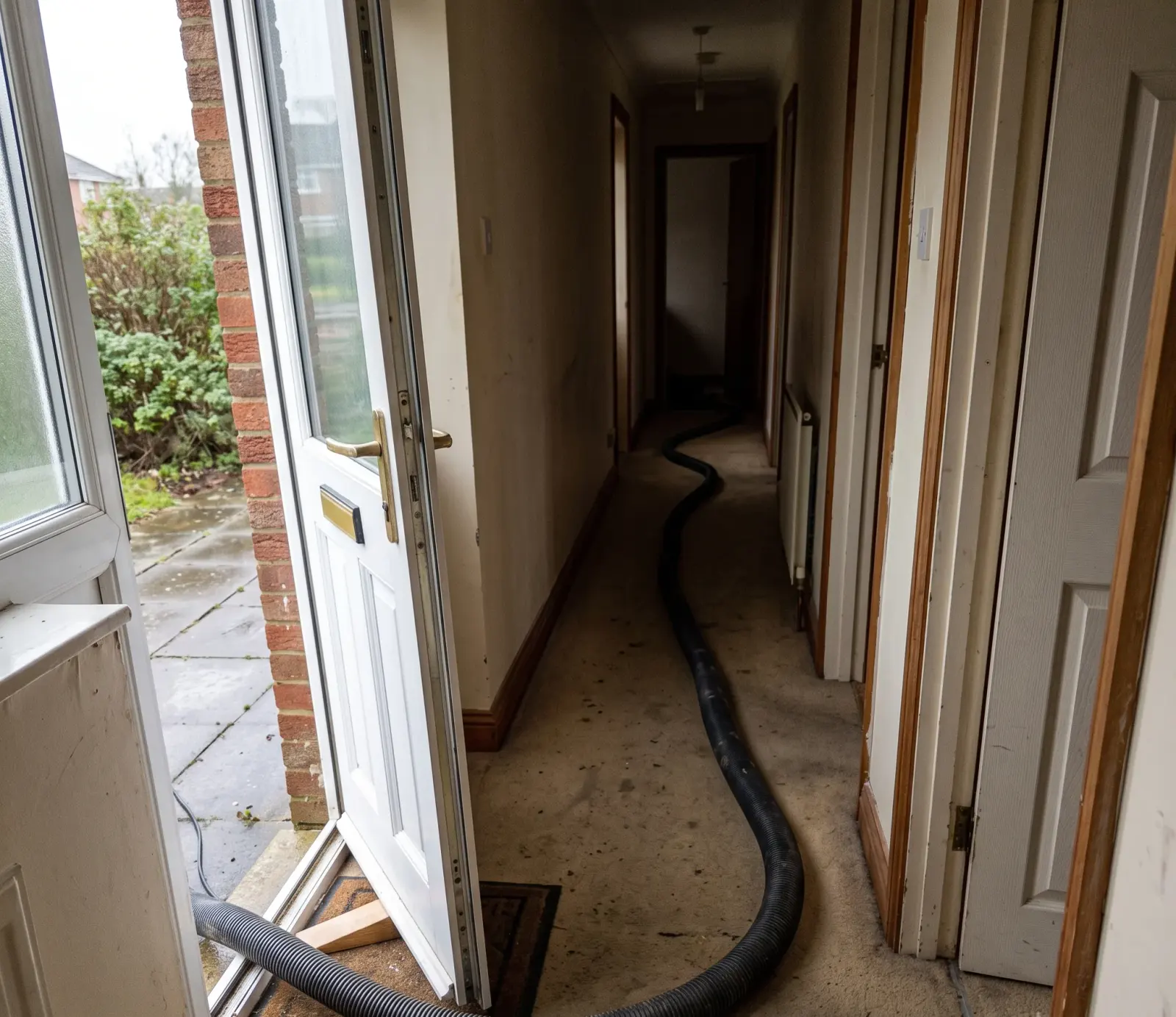
Think through how people and equipment will pass the work area. If an extraction hose or wet vacuum must cross a route used for patient transport, identify another approach or a time when that crossing can be managed by facility staff. For a Spokane Valley site, local references such as U.S. Route 2 may orient an arriving provider, while interior directions still need to specify the approved door and path. Keep staging and movement decisions with the facility’s designated contact.
Ask what equipment the provider expects to bring and how much clear floor space the removal task needs. Pumps or wet vacuums may be used to collect pooled water, but the facility should identify where those items can enter, be set down, and leave without blocking an operational route. In Spokane Valley, an after-hours plan should also say which entrance remains available and who can let the provider through. Do not treat an estimated arrival time as permission to enter a controlled area.
Set a simple update path before work starts: the provider contacts one facility representative, and that person relays changes to clinical operations and other affected teams. Decide who can approve a shift in work hours, an added room, or a temporary route closure. If the original contact becomes unavailable during a shift handoff, name the replacement. This prevents a schedule change from reaching one department while another continues to direct staff through the same space.
Define completion narrowly when planning the removal window. Extraction takes standing water out of affected areas; it does not establish that floors, walls, or other materials have dried. After the pooled water is gone, moisture may remain and require a separate assessment and drying plan. In Spokane Valley, facilities and clinical operations should decide who evaluates when a room can return to use under facility procedures, rather than treating the end of water removal as automatic clearance.
Keep follow-on tasks distinct when coordinating the schedule. Drying equipment may need its own placement and operating window, while cleaning, source repair, or restoration involves work beyond standing-water removal. Ask the provider to describe what the immediate extraction visit covers and which later decisions belong to the facility or another contractor. Washington requires contractor registration for construction and repair work; emergency extraction alone should not be described as requiring that registration. Clarifying the boundary helps managers plan downtime without assuming every later task is included.
Before calling, bring the internal contacts together around the affected rooms, approved entrance, access hours, and person authorized to adjust the plan. A manager can note the room names and operational limits for the discussion without turning the call into a full records project. Then ask an independent provider to explain the work sequence, expected access needs, and any constraint that could affect patient or staff movement. These details give the pros we connect you with a practical basis for discussing site scope.
For a Spokane Valley facility, the next step is a direct conversation between the facilities contact, clinical operations, and an independent extraction provider. Ask which entrance and work window fit the site, who will receive updates, and what conditions could change the boundary or timing. Also ask what the provider considers the end of extraction and what separate assessment may follow. Who can approve access if the named contact is away? Which department needs notice before a route changes? Those answers shape a usable plan.
Start by identifying where water is visible, then decide which rooms and routes must stay available for care. In Spokane Valley, facilities and clinical operations can set access windows, name who can approve changes, and tell the extraction provider which areas are sensitive or occupied. For example, a work route near U.S. Route 2 may need a different arrival plan from one reached by Highway 290. Ask for the removal scope by area and a record of work completed. Extraction removes pooled water; moisture checks, drying, cleaning, and restoration are separate steps to discuss.
Start with the property location, then use the linked places to find the relevant local page and confirm that address can request standing-water extraction, includingNewman Lake, Spokane and Spokane Valley. Before booking, clarify whether arrival or mileage is billed, then have the proposal distinguish water removal from any follow-on drying.
For a business property, pricing is generally organized by attendance, the area requiring removal, and how many returns conditions call for. The $700–$1,400 figure is only a benchmark; stairs, restricted entry, deeper pooling, or divided work zones may alter the estimate.At a commercial property in Spokane Valley, affected rooms, water depth, floor access, and contents or equipment to move can change the work list and estimate. For a site near Town Square Park, tell the pros we connect you with about those conditions, any restricted entry, and areas needing attention, then request the proposed tasks and estimate in writing.For full Emergency Water Extraction price ranges, consult pricing guide; commercial overview outlines commercial removal and follow-up for moisture that remains.
Restaurant Water Extraction
Spokane Valley Hotels
Campus Water Removal
Have facilities staff and clinical operations agree on rooms that can be entered, when entry is allowed, and which routes must stay clear. In Spokane Valley, a care area may remain in service while nearby rooms are closed, so communicate those boundaries before arrival. Give the provider one contact who can relay schedule changes, and ask them to confirm the work areas and expected access window before equipment is brought in.
Set an arrival window that accounts for the facility’s operating schedule, security procedures, and any periods when equipment noise or movement would interfere with care. A Spokane Valley site may have different entry rules after hours, so confirm who can admit the provider and who can approve a revised time. Ask for an estimated arrival window and a way to reach the site contact if plans change.
Emergency water extraction removes pooled water from affected areas. Tell the provider if water has reached furniture or stored items. In Spokane Valley, ask the provider to state where removal will take place and what work is outside that scope. Moisture assessment and drying can be planned as separate follow-up work if needed.
A facility can remain open only if its own staff determine that the affected rooms and nearby routes can operate safely during the work. Set boundaries for patient and staff movement, identify a backup route, and tell the provider where equipment may travel. If operations change after arrival, the designated contact can pause or redirect work while the facility reviews the new conditions.
For a Spokane Valley medical facility, ask the pros we connect you with for an arrival window and expected time on site before reserving a service corridor.
Call (509) 800-4628